跳到主要内容
  • 无障碍
  • ZH
    Show search
    logo
    ZHDEENZH
    search-icon
  • 无障碍
    1. 主页
    2. 新闻室
    3. Lifesaver with infrared signature: ZF LIFETEC makes the seat belt visible to in-cabin cameras

    Lifesaver with infrared signature: ZF LIFETEC makes the seat belt visible to in-cabin cameras

    2026-July-23
    Download icon
    • New seat belt fabric enables in-cabin cameras to detect whether the seat belt is worn correctly 
    • Start of series production planned for August 2026
    • Growing importance of in-cabin camera-based fatigue and distraction detection in new vehicles: EU requirement entered into force on July 7, 2026
    • “We have been relying on in-cabin cameras for years. With our infrared seat belt, we improve the quality of occupant detection and, in turn, enhance safety for all occupants,” said Harald Lutz, Senior Vice President Research & Development at ZF LIFETEC.
    • 50 years of mandatory seat belt use in Germany: ZF LIFETEC has been pioneering safety for 65 years and helped pave the way for safer mobility worldwide
    • Company will present its infrared seat belt fabric at leading AIRBAG 2026 event, taking place from December 8 to 10 in Mannheim
       

    Alfdorf, July 23rd, 2026   +++   ZF LIFETEC, a leading global manufacturer of passive safety systems for passenger cars, has developed a seat belt with an integrated infrared signature. The so-called “Infrared Belt” enables interior cameras to reliably verify that the seat belt is being worn correctly. This solution helps vehicle manufacturers meet current and future safety requirements of independent vehicle safety rating organizations like NCAP. Series production is already scheduled to start in August 2026.
     

    Alfdorf, July 23rd, 2026   +++   ZF LIFETEC, a leading global manufacturer of passive safety systems for passenger cars, has developed a seat belt with an integrated infrared signature. The so-called “Infrared Belt” enables interior cameras to reliably verify that the seat belt is being worn correctly. This solution helps vehicle manufacturers meet current and future safety requirements of independent vehicle safety rating organizations like NCAP. Series production is already scheduled to start in August 2026.

    “At ZF LIFETEC, we have relied for years on the targeted interaction between our safety products and in-cabin cameras,” said Harald Lutz, Senior Vice President Research & Development at ZF LIFETEC. 
    “The significant role that in-cabin cameras already play in mobility is highlighted by the EU requirement, which came into force on July 7, 2026, mandating in-cabin camera-based fatigue and distraction detection in new vehicles to monitor driver attention,” Lutz added. However, it is not only the European Union that is placing increasing importance on reliable camera-based occupant detection. Euro NCAP is also giving greater emphasis to this technology, with the reliable detection of correct seat belt positioning being one of its key focus areas. This is exactly where ZF LIFETEC’s new “Infrared Belt” comes into play. The seat belt is one of the most important restraint systems in a vehicle and can only provide its full protective effect when worn correctly. With an infrared seat belt webbing specifically developed for camera-based occupant detection, ZF LIFETEC enables vehicle manufacturers to reliably determine whether the seat belt is positioned correctly. “Our new seat belt enables infrared cameras to more accurately identify whether an occupant is optimally protected. By doing so, we create the foundation for higher-quality occupant detection and significantly enhance safety for drivers, front passengers, and rear-seat occupants alike,” said Lutz.

    Clear visibility for interior cameras
    The new “Infrared Belt” from ZF LIFETEC is based on a targeted material design of the fabric. This involves combining different yarns which have specific spectral properties. They produce an integrated infrared signature that camera-based systems can clearly interpret. Cameras operating in this optical spectrum detect differences in the reflection and absorption of materials. Based on this physical principle, the seat belt stands out clearly from clothing, skin, or seat surfaces, regardless of lighting conditions inside the vehicle. The result is a stable, high-contrast signal that makes it possible to precisely determine the belt’s position. Series production is scheduled to begin in August 2026 – for all seating positions, including the rear seats.


    Reliable detection independent of light and environment
    Infrared cameras can track the path of the seat belt along the body (seat belt position). Based on this information, automakers can use intelligent detection algorithms to determine whether the seat belt is correctly routed over the shoulder or, for example, runs under the arm or behind the occupant’s back. Compared to traditional sensor systems, this approach therefore offers clear advantages: Seat belt buckle sensors, for example, only detect whether a seat belt is fastened – but provide no information about its actual protective effect. Only the combination of infrared sensors and an optimized seat belt fabric make it possible to clearly assess the actual seat belt position. The solution also proves to be more robust than conventional RGB cameras. Optical reflections or backgrounds of identical colors can hinder the detection of the belt’s path. Infrared-based detection, on the other hand, relies on clearly defined physical material properties, allowing the belt to be reliably identified regardless of clothing, lighting, or the environment.

    EU Requirement for In-Cabin Cameras in New Vehicles from July 7, 2026
    EU Regulation 2023/4523 establishes camera-based fatigue and distraction detection as a key building block of modern vehicle safety. These systems detect when drivers divert their attention from the road for too long and provide timely warnings in critical situations. Their purpose is to help reduce distraction-related accidents and improve safety for all road users. Since July 7, 2026, such systems have been mandatory for all newly approved vehicle types in the European Union. The regulation underscores the growing importance of intelligent camera technologies for the future of road safety.

    Actual protective performance of seat belts: Euro NCAP targets for 2030
    Within Vision 2030, Euro NCAP is consistently focusing vehicle safety assessments on real-life safety performance. The emphasis lies on a holistic view of safety, and the question of how effectively restraint systems perform under real-world conditions. 
    To answer this, Euro NCAP requires vehicles to detect occupants and assess whether they are optimally protected in the event of an accident. Regarding seat belts, it is no longer sufficient for a vehicle to detect whether the tongue plate is inserted into the buckle. The system must also reliably evaluate whether occupants are wearing the belt correctly so that it can deliver its protective effect. As a result, camera-based interior monitoring systems are becoming increasingly important. They enable the reliable detection of seat belt misuse and provide this information to vehicle safety systems. In addition, Euro NCAP requires that detected seat belt misuse be communicated through appropriate audiovisual warnings in order to prompt occupants to wear the seat belt correctly. Looking ahead, further enhancements of occupant monitoring requirements are expected as part of Euro NCAP's Vision 2030 roadmap.


    50 years of mandatory seat belt use in Germany – 65 Years of Passive Safety 
    at ZF LIFETEC
    The introduction of mandatory seat belt use in Germany in January 1976 was a milestone in vehicle safety. For 65 years, ZF LIFETEC has played a key role in shaping the development of modern seat belt systems. As early as 1967 – just six years after the company was founded – the company, then operating under the name REPA, began mass-producing static seat belts, thereby laying the foundation for decades of continuous pioneering work in occupant protection. Today, the seat belt is at the heart of networked safety architectures that intelligently integrate mechanics, sensor technology, and software. At the same time, the seat belt is an integral component of modern passive safety systems. Adaptive sensor technology and real-time data fusion now ensure that seat belt, airbag, and steering wheel systems only achieve their full protective effect when working together to provide occupants with the best possible protection in the event of an accident. With the “Infrared Belt”, ZF LIFETEC takes the seat belt to a new level of development – transforming it into an active element that allows the actual protective effect to be precisely detected.

    Presentation at AIRBAG 2026
    The new infrared seatbelt webbing for the driver, front passenger, and rear passengers is part of the product portfolio that ZF LIFETEC will present at AIRBAG 2026 (December 8 –10, 2026, in Mannheim). This international event is a key platform for passive safety and brings together automakers, suppliers, research institutions, and regulatory agencies.
     

    ZF_LIFETEC_Infrared_Belt.jpg

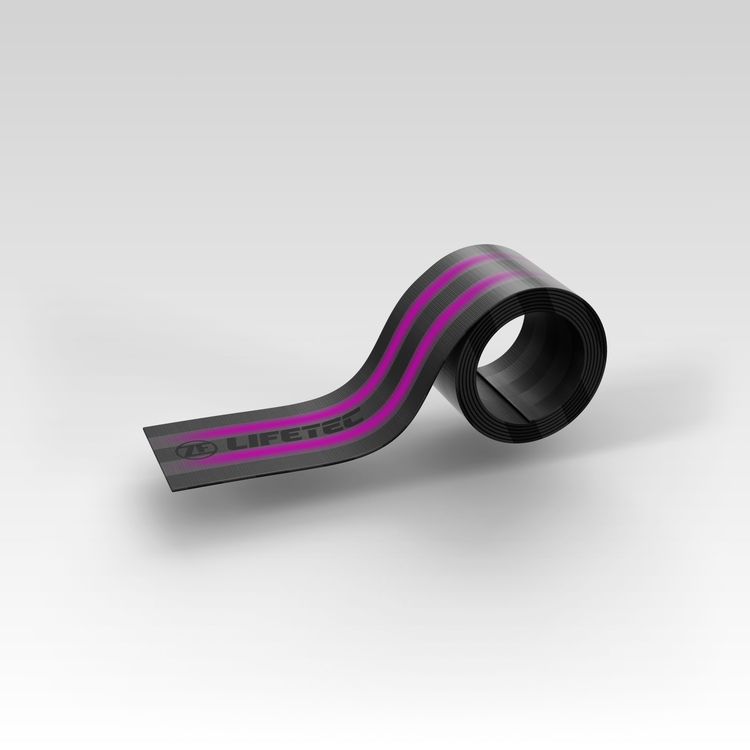
    The ZF LIFETEC “Infrared Belt” indicates whether the seat belt is worn correctly – only then can this life-saving device deliver its full protective effect. (Image: ZF LIFETEC)

     

    Download files button
    Contact
    Man in suit smiling

    Knut Zimmer

    Spokesperson Product & Technology, ZF LIFETEC

    发送电子邮件 mailto:knut.zimmer@zf-lifetec.com
    Florian_Zink.jpg

    Florian Zink

    Kommunikationsmanager, ZF LIFETEC

    发送电子邮件 mailto:florian.zink@zf-lifetec.com
    ZF Lifetec Logo

    ZF Airbag Germany GmbH 

    Wernher-von-Braun-Straße 1

    84544 Aschau am Inn


T: +49 8638 9650

    Follow Us

    Social iconSocial icon
    © ZF LIFETEC

    无障碍设置

    无障碍改进

    阅读障碍字体
    灰色调
    Big cursor
    Stop animations

    文本间距 (0px)

    增加文本间距
    减少文本间距
    重置文本间距

    缩放 (100%)

    放大
    缩小
    重置缩放

    对比色

    Accessibility高对比度
    Accessibility高对比度
    Accessibility高对比度

    数据隐私

    基本

    基本 cookie 启用基本功能,对于网站正常运行是必不可少的。

    统计

    统计 cookie 匿名收集信息。这些信息帮助我们了解访问者如何使用我们的网站。